5 Sustainable Ways to Visit Lake Tahoe
Lake Tahoe is the jewel of the Sierra Nevada, and I’ve been traveling here since I was a kid, visiting my grandparents who had a cabin on the West Shore.
It looked like a postcard then and still does, with so many amazing things to see and do between the pine-covered peaks and sapphire-blue water.
But even paradise has its limits. Nearly 15 million visitors descend on Lake Tahoe each year (including day-trippers, overnighters, and those traveling through the area).
The result? Traffic jams on the two-lane road, litter on trails and beaches, and local communities that must endure tourism’s damaging footprint.
But it is possible to experience the lake life responsibly, without sacrificing outdoor fun, beaches, and epic views.
Here are 5 ways to help make a visit to Lake Tahoe better for residents, the lake, and the environment.
Disclosure: This post contains affiliate links, and I may earn a tiny commission if you click and purchase through them, at no extra cost to you! Thank you for helping me do what I love.
1. Drink Tahoe Tap (Ditch the Plastic)
Nothing makes my eye twitch faster than seeing someone lug cases of bottled water to an alpine lake that has some of the cleanest, best-tasting tap water in the country.
The tap water around Tahoe is exceptional, safe, and regulated far more strictly than bottled alternatives. So whether you’re skiing, on a boat, or enjoying a lakeside restaurant, bring your own refillable bottle, top up at refill stations, and order tap water from restaurants.
It’s better than fine. It’s Lake Tahoe pure.
Fewer disposable water bottles means less litter, fewer plastics entering the watershed, and less strain on local landfills and wildlife. Mother Earth thanks you.
2. Pretend Lake Tahoe is Your Backyard
Turquoise coves, pine-scented trails, Olympic ski resorts—it’s all gorgeous and inspiring. But the environment is fragile, so adopt a Tahoe mindset. It’s easy— just pretend Lake Tahoe is your backyard and behave accordingly.
Sustainable Travel Tips
- Park only in designated areas
- Stick to marked trails when hiking
- Clean up after your dog
- Use reusable shopping bags and bottles
- Don’t feed the wildlife
- Only light fires in approved areas
- Respect noise levels
3. Minimize Driving (It’s easier than you think)
Yes, having our own wheels is convenient. But more cars mean more traffic, pollution, and inconvenience for local residents.
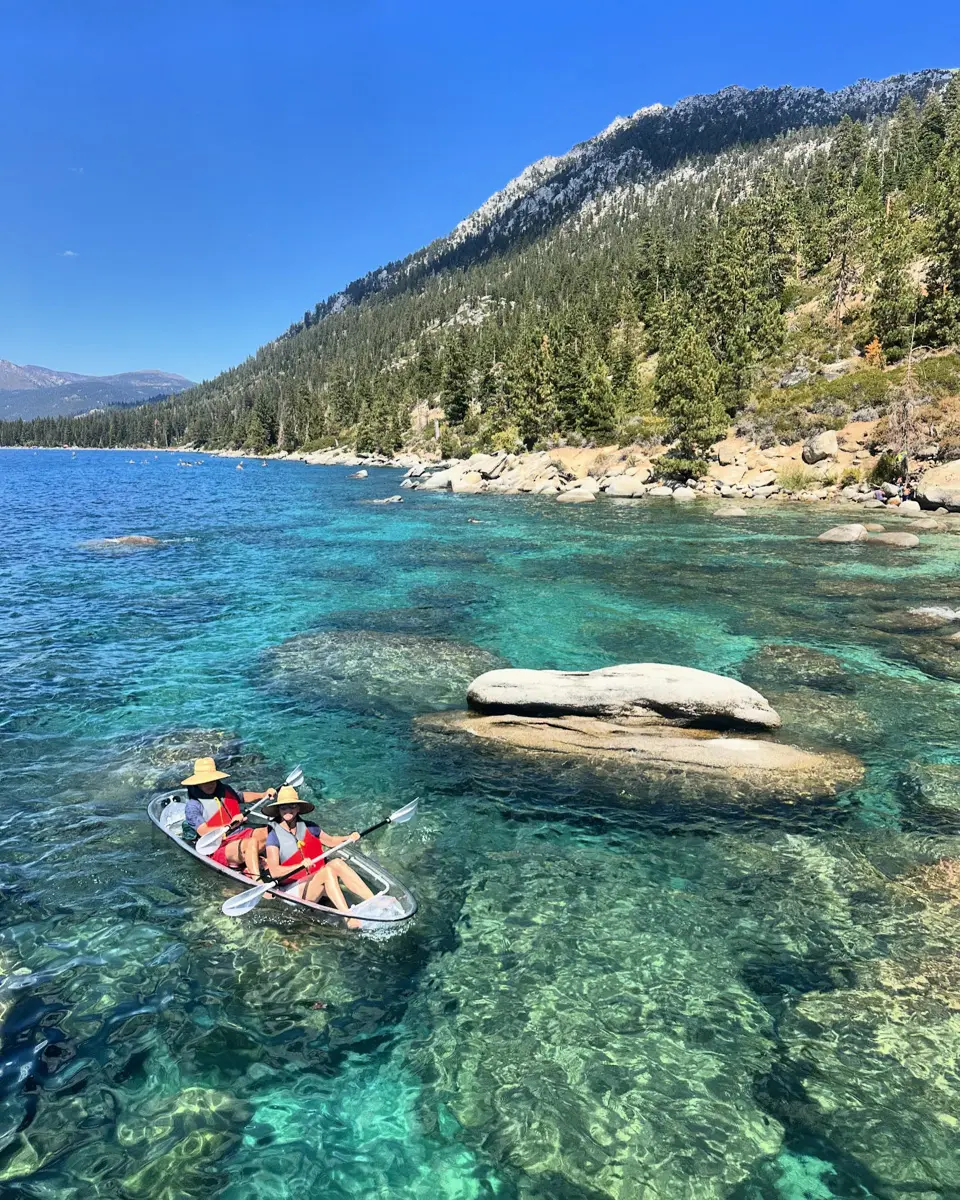
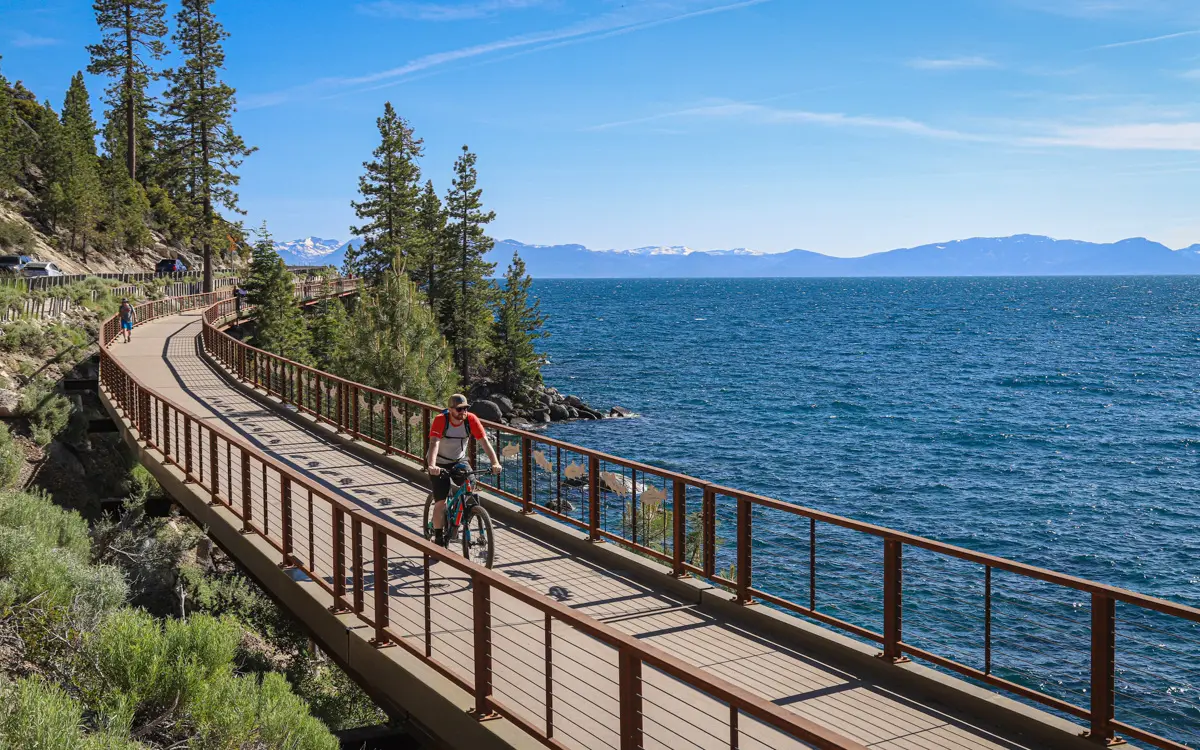
Luckily, getting around without a car is not only easy and good for the environment, but it’s also a great way to experience lake life. Walking, hiking, kayaking, paddleboarding, and tubing are fun and amazing human-powered ways to explore Lake Tahoe.
Biking is also popular during the summer. I personally prefer to grab a map and a backpack with snacks, hop on an e-bike.
For first-time visitors, a leisurely self-guided tour is a fun way to get the lay of the land while enjoying the scenic vistas you’ll miss from a car window.
Obviously, winter and mobility challenges require different solutions and Lake Tahoe has many transportation services that make ditching the car easy, including:
- Lake Link (South Shore on-demand shuttle)
- TART & TART Connect (North Shore and Truckee; free and on-demand shuttles)
- BlueGO (Heavenly Ski Resort shuttles in winter)
- Diamond Peak Ski Shuttle (free pick ups around Incline Village to Diamond Peak)
- Hotel shuttles (ask your hotel if they provide complimentary or scheduled shuttles to resorts and town. Many do)
4. Visit During Shoulder Seasons
Summer and ski season may be your only choice if you’re traveling with kids and are beholden to school schedules. But these times of year are also crowded, more expensive, and have a high impact on Lake Tahoe’s delicate ecosystems.
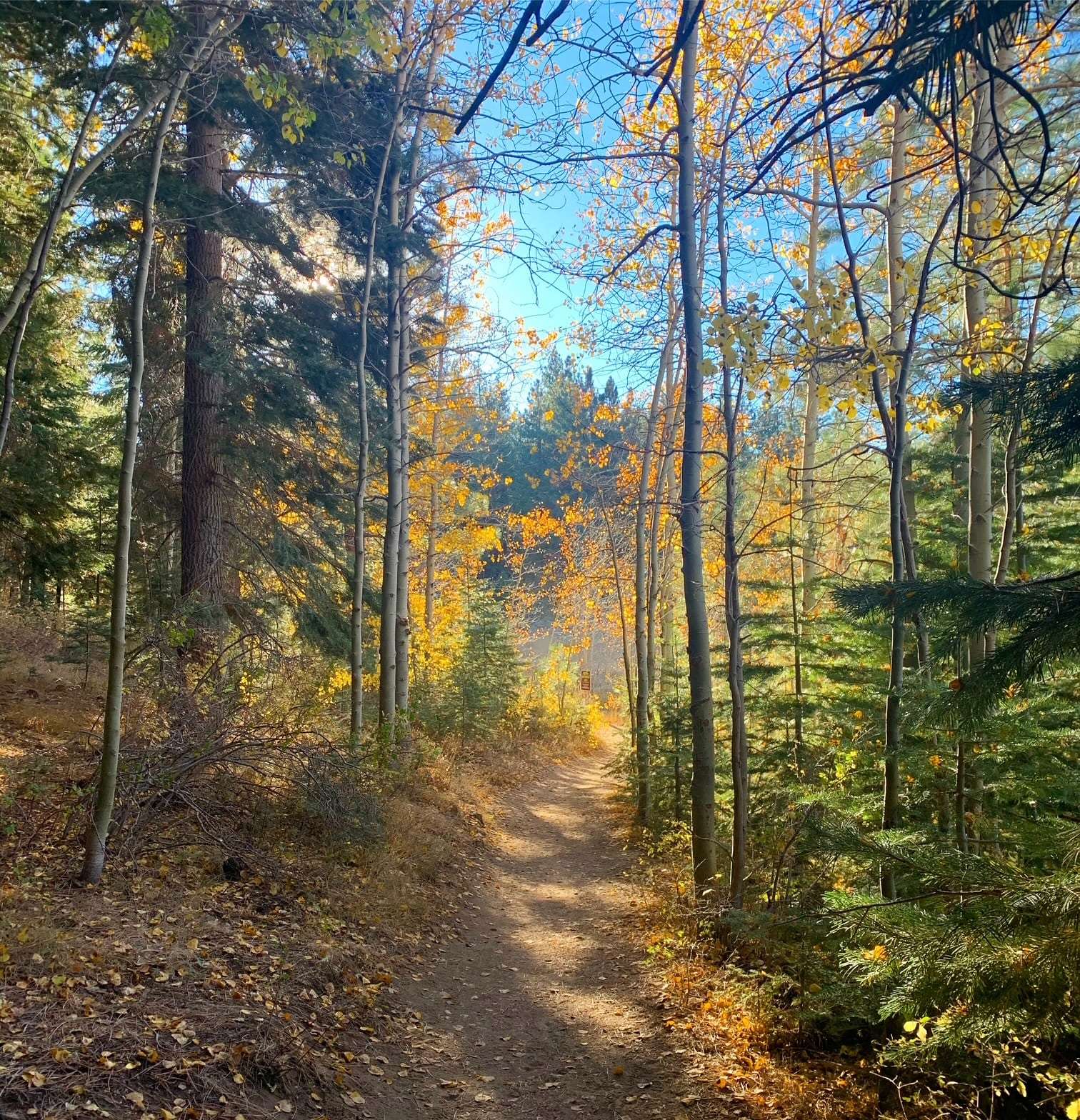
September is my wedding anniversary month, and I have spent a few of them watching the leaves change around Lake Tahoe, taking a sail around the lake, and hiking and biking in the year’s best weather.
Mid-September to the end of October is magical, but all seasons have something to offer in Lake Tahoe.
Another great time to consider a visit is January, after the holidays, and right after MLK weekend. The streets, trails, ski resorts, and restaurants have breathing room.
Other perks of off-peak travel include:
- Less traffic
- Easier parking
- Lower hotel rates
- A slower, sweeter mountain-town vibe experience
5. Volunteer
Want instant good karma at the cost of just a few hours, or even minutes, of your time? Consider signing up to volunteer while you’re in Lake Tahoe. Like topping off your champagne just a splash, every little bit helps!
Some volunteer options around Lake Tahoe include:
- Keep Tahoe Blue (The League to Save Lake Tahoe): hosts frequent community beach clean-ups and eco-events
- Clean Up the Lake: visit their Environmental Dive Center to learn about aquatic ecosystems, or become a certified environmental diver
- U.S. Forest Service: volunteer for trail work or education programs (college students can earn credit!)
Of course, these environmental concerns aren’t just limited to Lake Tahoe. Being a mindful traveler is a practice we can adopt wherever we go.
More California Travel Guides
frequently asked questions
Read more about traveling to Lake Tahoe