Best Towns on the French Riviera: Where to Stay and Base Yourself Along the Côte d’Azur
The French Riviera stretches from Saint-Tropez in the west to the Italian border in the east, and has long been associated with wintering aristocrats before becoming one of Europe’s most celebrated summer playgrounds.
Today, the French Riviera, aka the Côte d’Azur, offers an exciting mix of beach towns, hilltop villages, gorgeous gardens, more ‘natural’ enclaves, and one unmistakable royal outpost—Monaco—making it easy to discover many in one trip.
But which are best towns on the French Riviera? It depends on your travel style.
Luckily, distances are short between many of them, which means you don’t have to choose just one.
If you’re visiting for the first time, plant yourself in Nice, and plan for easy day trips by car, bus, tour, or train to some of the French Riviera’s most beautiful towns.
Disclosure: This post contains affiliate links, and I may earn a tiny commission if you click and purchase through them at no extra cost to you! Thank you for helping me do what I love.
How to Choose the Right Town on the French Riviera
If this is your first visit, aim for access and flexibility. On a return trip, hunker down in a quiet village for atmosphere and setting
Best first-time base: Nice & Villefranche-sur-Mer
Best beaches: Antibes, Théoule-sur-Mer, Saint-Tropez
Most glamorous: Saint-Tropez, Monaco
Best hilltop villages: Èze, Saint-Paul-de-Vence, Mougins
Italian-influenced Riviera feel: Menton
Underrated and quieter discoveries: Mougins, Biot
The Best Base for a First-Time Visit to the French Riviera
For first-time visitors, Nice and Villefranche-sur-Mer make the most practical and rewarding bases along the French Riviera.

Nice-Côte d’Azur (NCE) is the region’s main airport, and the city has excellent train connections running east toward Monaco and Menton on the Italian border, and west toward Antibes and Cannes.
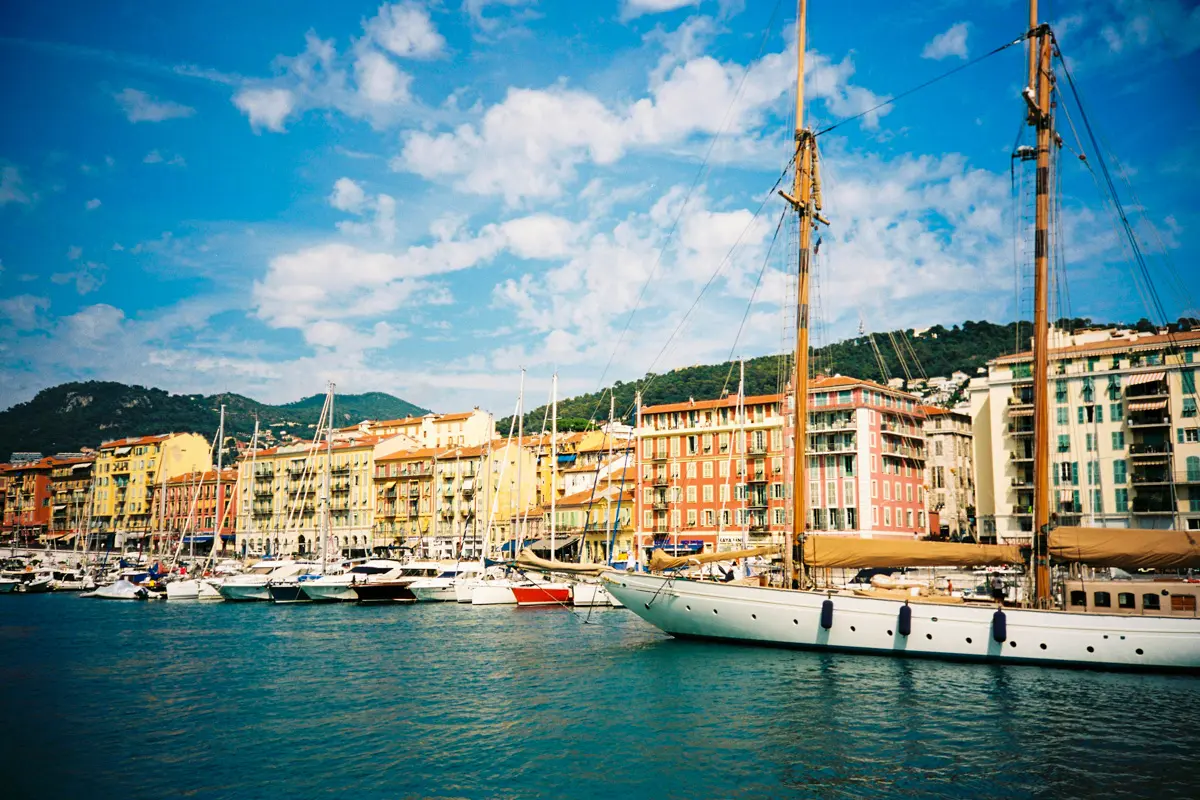
In town, Nice has a lively mix of beaches, markets, cafe culture, museums, and Old Town streets. It’s especially convenient if you’re traveling without a car.
Just ten minutes away by train or bus, Villefranche-sur-Mer delivers a completely different vibe with pastel waterfront tumbling down the hillside to the protected harbor, and the feeling of staying in a classic French Riviera fishing village, all while remaining close to everything Nice offers.
Together, the two create an ideal pairing for a first-time visit to the French Riviera
Nice: The Pearl of the French Riviera
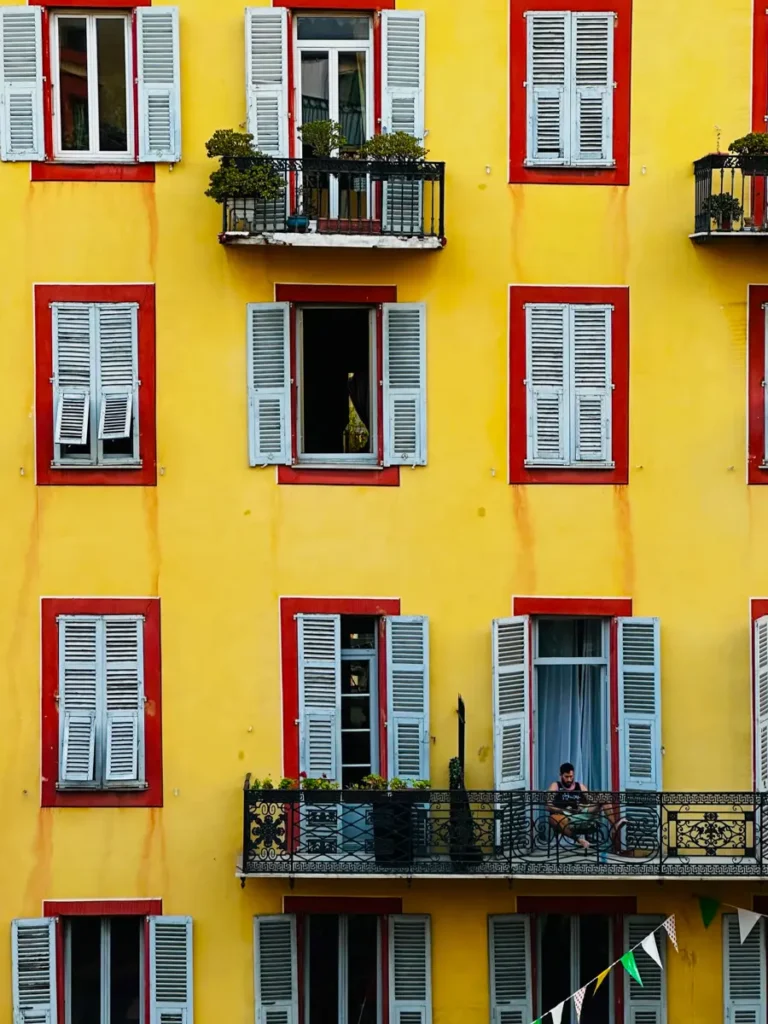
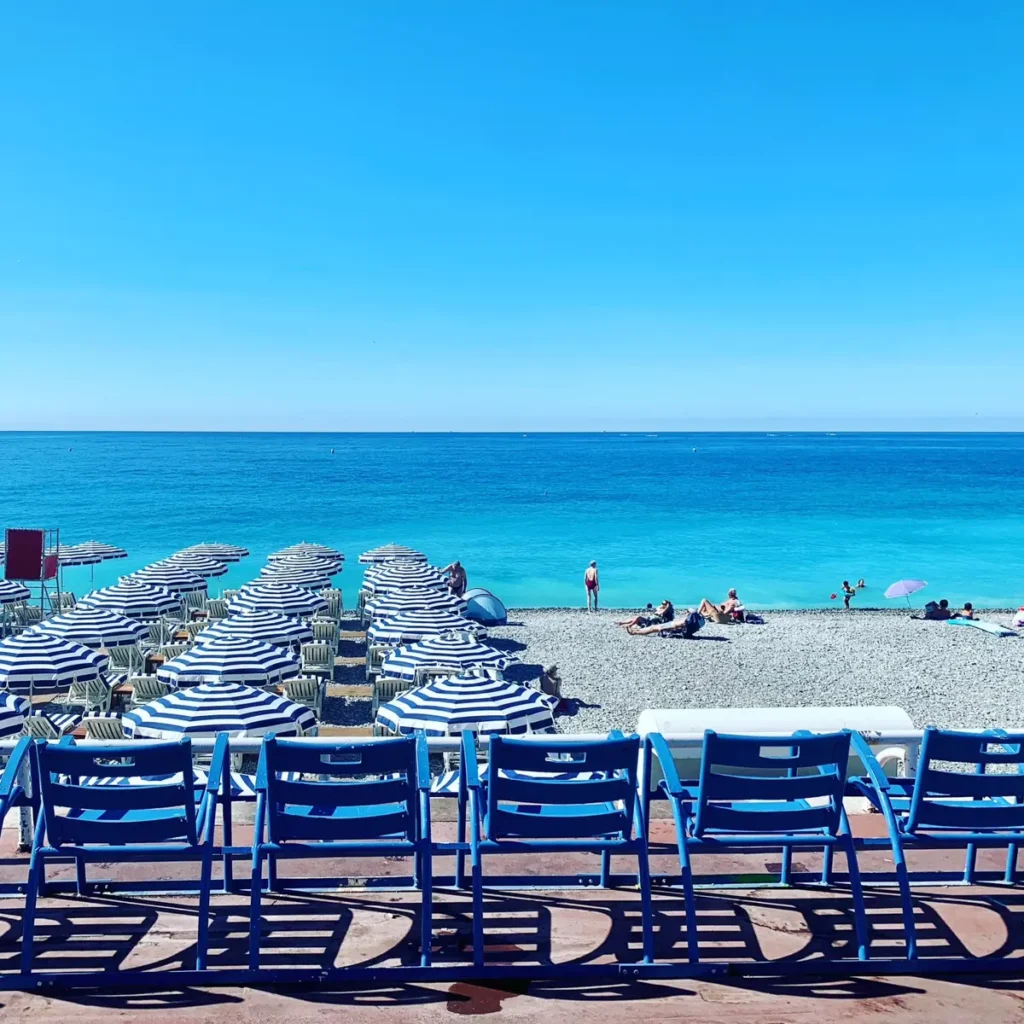

As the gateway to the French Riviera, Nice combines big city conveniences with Riviera charm, including an Old Town with narrow lanes and lively squares, a daily Cours Saleya market, and the long waterfront known as the Promenade des Anglais, or simply the Prom.
Cultural highlights include the Musée Matisse and the hilltop views from Castle Hill, overlooking the Baie des Anges and the terracotta rooftops of Vieux Nice.
A key perk of basing yourself in Nice is that it’s the most convenient hub for train and bus connections to towns along the coast, making it easy to plan day trips and excursions to iconic towns like Villefranche-sur-Mer, Antibes, Cannes, Monaco, and Menton without a car.
For first-time visitors, especially, Nice is the most flexible base for exploring the French Riviera by train or guided tours, many of which begin in Nice.
Classic Riviera Beach Towns
Saint-Tropez
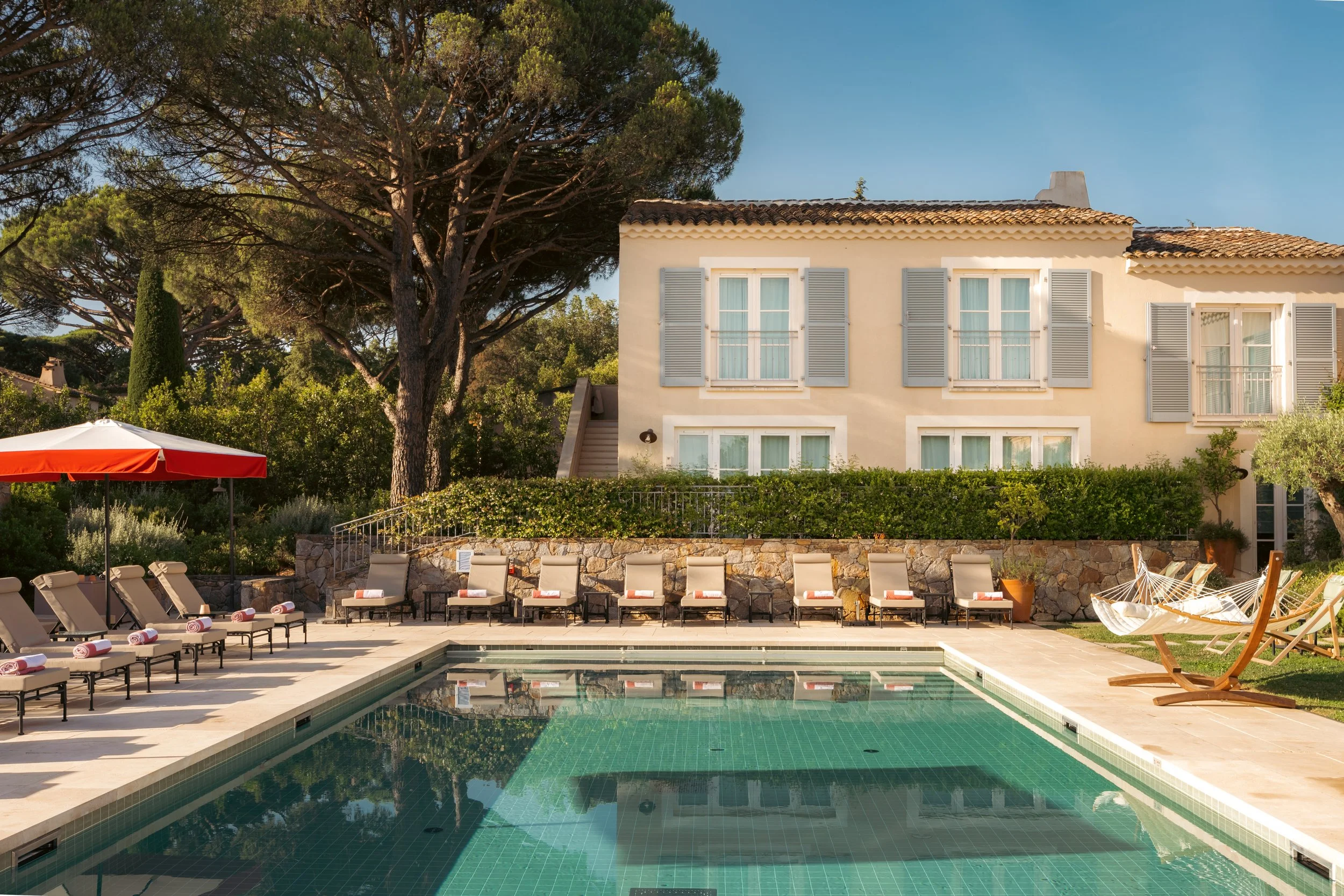
Still the Riviera’s most famous seaside name, Saint-Tropez balances Provençal village charm with legendary nightlife, shopping, beach clubs, fantastic dining, and exceptional hotels—including Chateau de la Messardière, the setting of Season 4 of White Lotus.
It could be a little far for a casual day trip from Nice, but worth planning for if Saint-Tropez is on your Riviera wish list (and I don’t blame you one bit if it is).
See my comprehensive guide on the best ways to get to Saint-Tropez.
Cannes
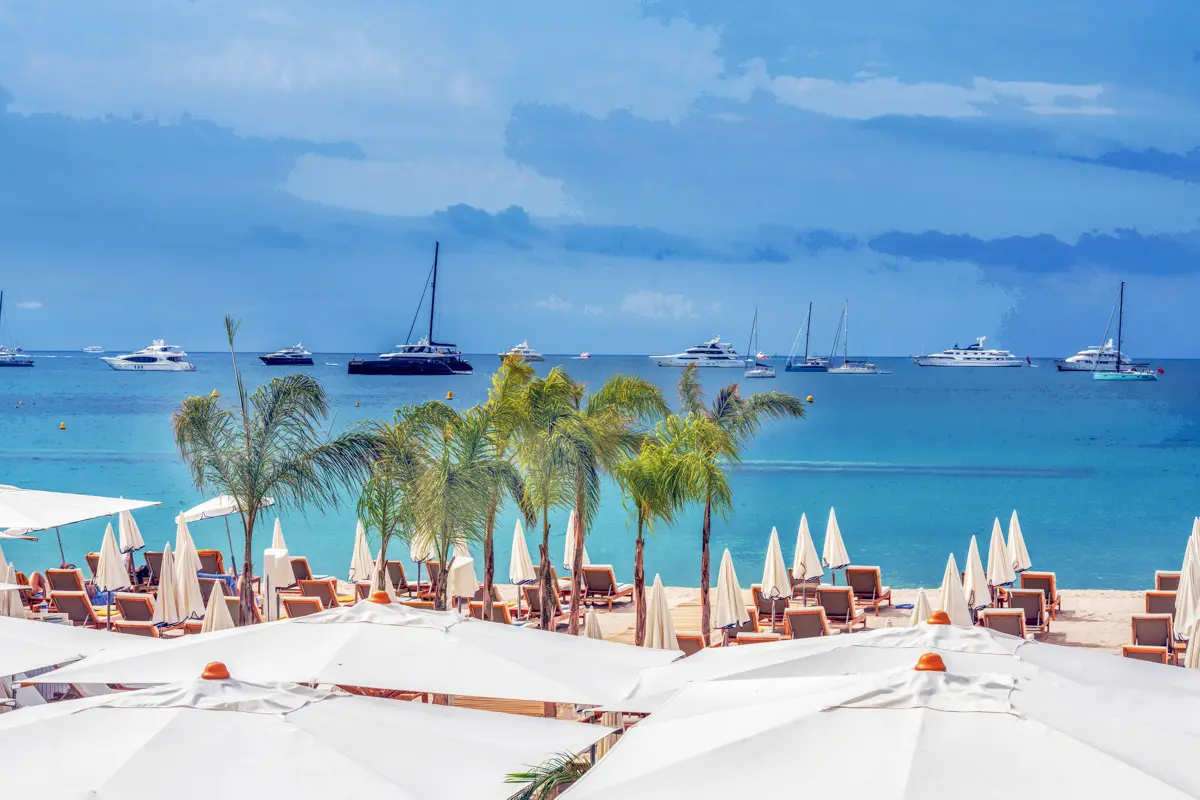
Best known for its red carpet for its April film festival, Cannes is also one of the French Riviera’s most practical and elegant coastal bases.
The palm-lined Croisette promenade and its famous hotels anchor the waterfront, while the historic Le Suquet quarter above the harbor offers narrow streets, cozy restuarants and views toward the Lérins Islands just off the coast.
Cannes is well-connected to the rest of the Riviera by train and has easy access to nearby villages like Mougins and Théoule-sur-Mer, for travelers looking for more under-the-radar destinations to explore.
Antibes
If Nice and Cannes feel too much like cities, and Saint-Tropez and Monaco feel too much like scenes, Antibes often ends up being the French Riviera town travelers settle into most comfortably.
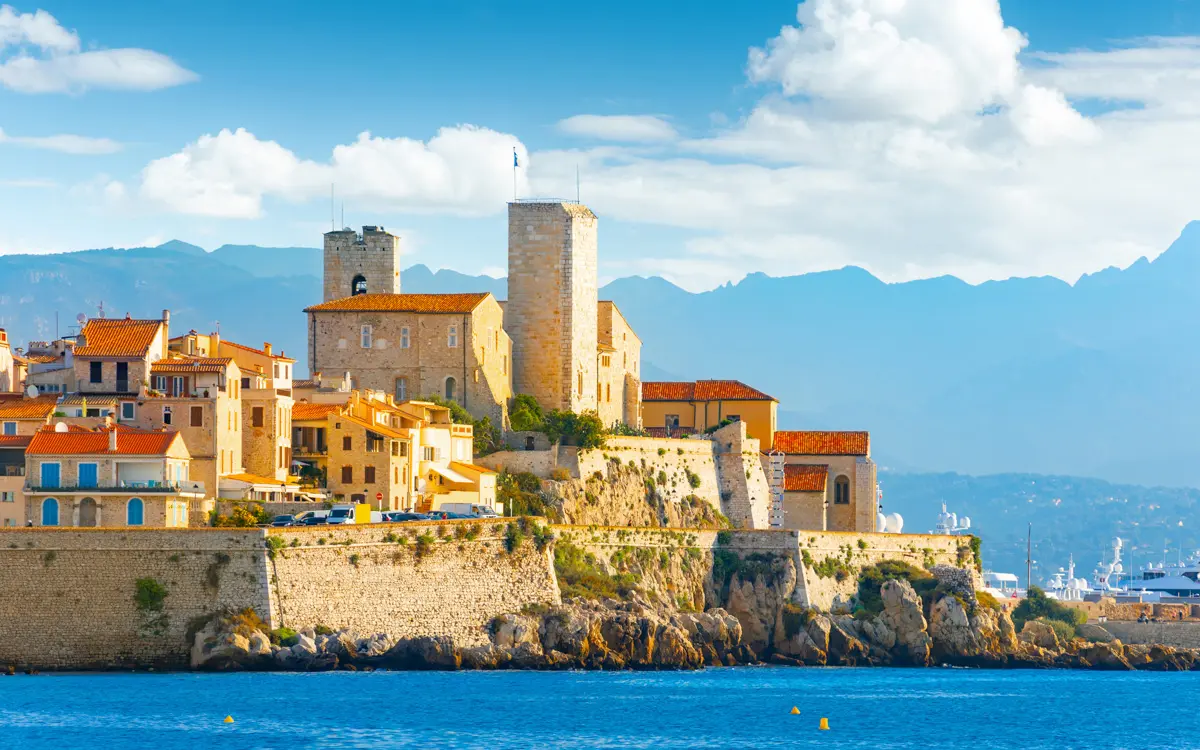
Very close to Nice, Antibes has a picturesque old town and rampart walls that make it obscenely photogenic; sandy beaches (rare for the region) and a walkable old town that make it feel like the French Riviera; and the Picasso Museum, which lets you throw a little culture into your itinerary between sips of rosé.
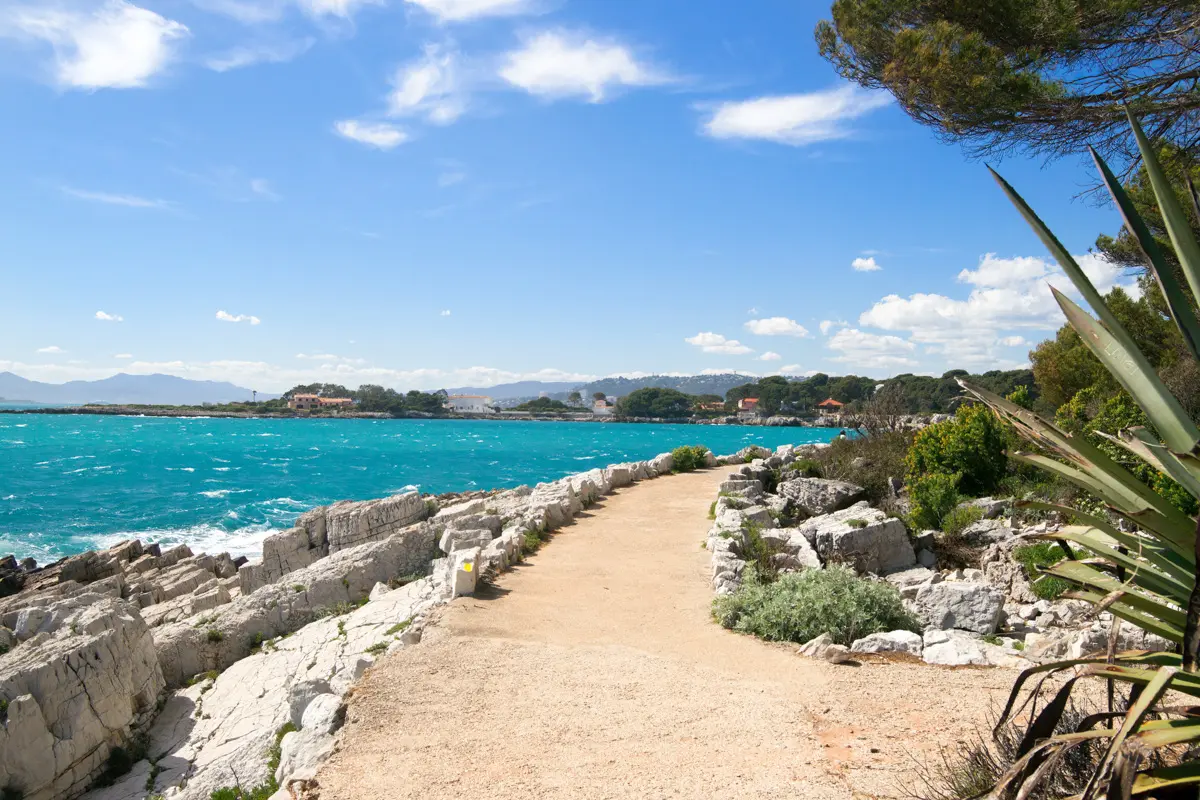
The nearby Cap d’Antibes peninsula offers some of the Riviera’s most beautiful coastal walking trails, a good place to contemplate the town’s storied literary history as a haven for “Lost Generation” writers, most notably F. Scott Fitzgerald, who used the area as his muse in Tender Is the Night.
Picturesque Towns Between Nice and Menton
The stretch of coastline between Nice and Menton includes some of the Riviera’s most picturesque seaside towns, each easy to visit by train or bus and ideal for slow harbor walks, waterfront dining, coastal hikes, and scenic viewpoints along the eastern Côte d’Azur.
Beaulieu-sur-Mer
Beaulieu-sur-Mer reflects the Riviera’s Belle Époque heritage with elegant waterfront promenades and nearby landmarks like Villa Kérylos, a reconstruction of an ancient Greek seaside residence.
The town sits directly on the coastal train line and makes an easy stop between Nice and Monaco.
Villefranche-sur-Mer
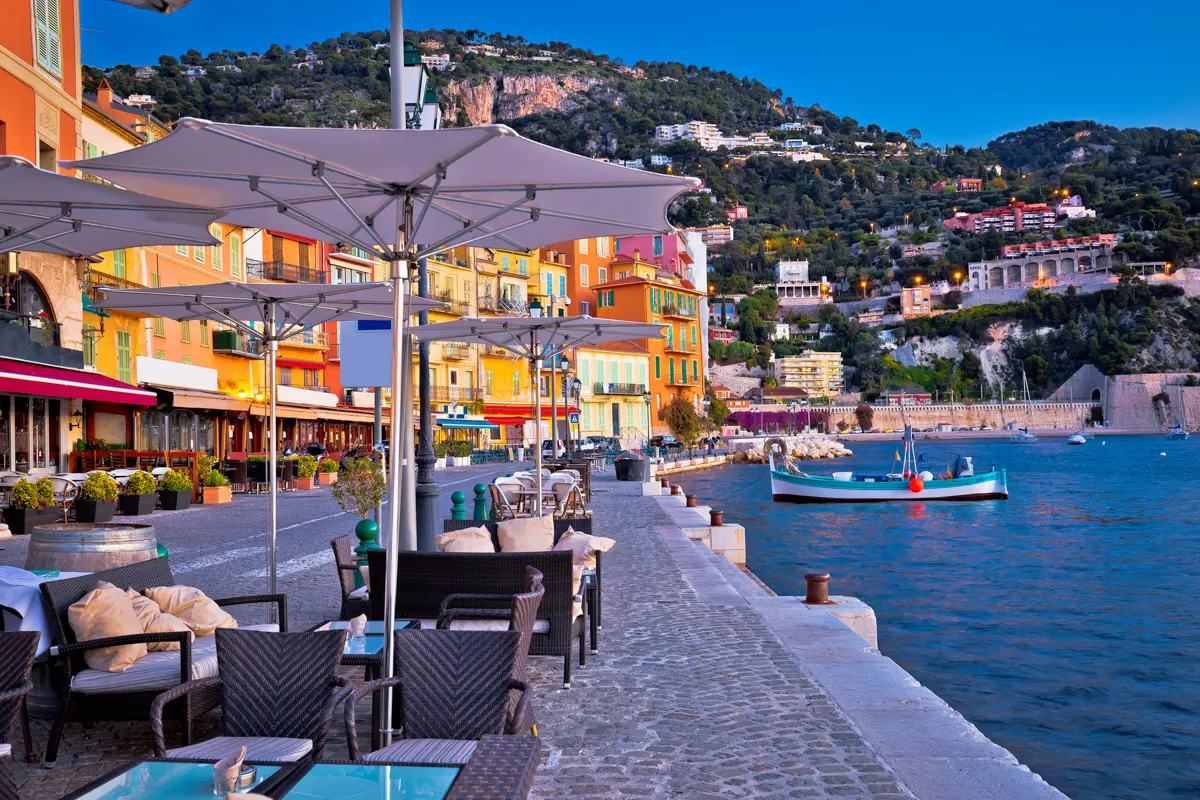
If you’ve ever imagined staying in a classic Riviera harbor town, this is probably the one you were picturing.
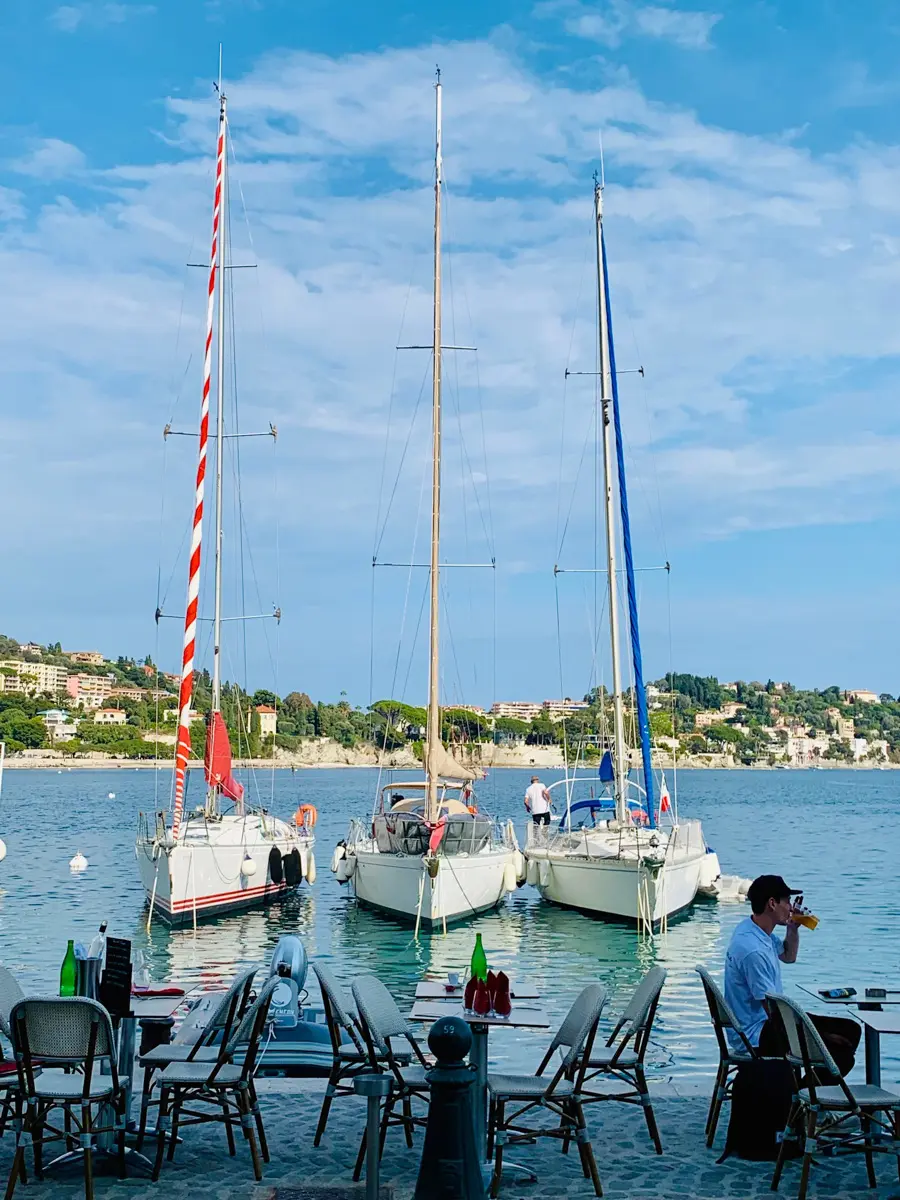
Villefranche-sur-Mer is a combination of colorful village houses, a quaint harbor, and alfresco dining just minutes from Nice by train or bus.
Its wide sandy public beach, Plage des Marinières, sits directly beside the train station, making it one of the easiest and most accessible swimming spots from Nice.
Villefranche is also an ideal base for exploring nearby Saint-Jean-Cap-Ferrat, where quiet coves, coastal walking paths, and landmark villas like Villa Ephrussi de Rothschild, with its nine beautiful gardens and incredible French Riviera views.
Èze Village
Perched more than 1300 feet (400 meters) above the coastline between Nice and Monaco, Èze Village is one of the Riviera’s most dramatic hilltop destinations, known for its narrow medieval lanes and sweeping views over the Mediterranean.
At the summit, the Jardin Exotique d’ Èze offers arguably the most spectacular panoramic viewpoints on the French Riviera.
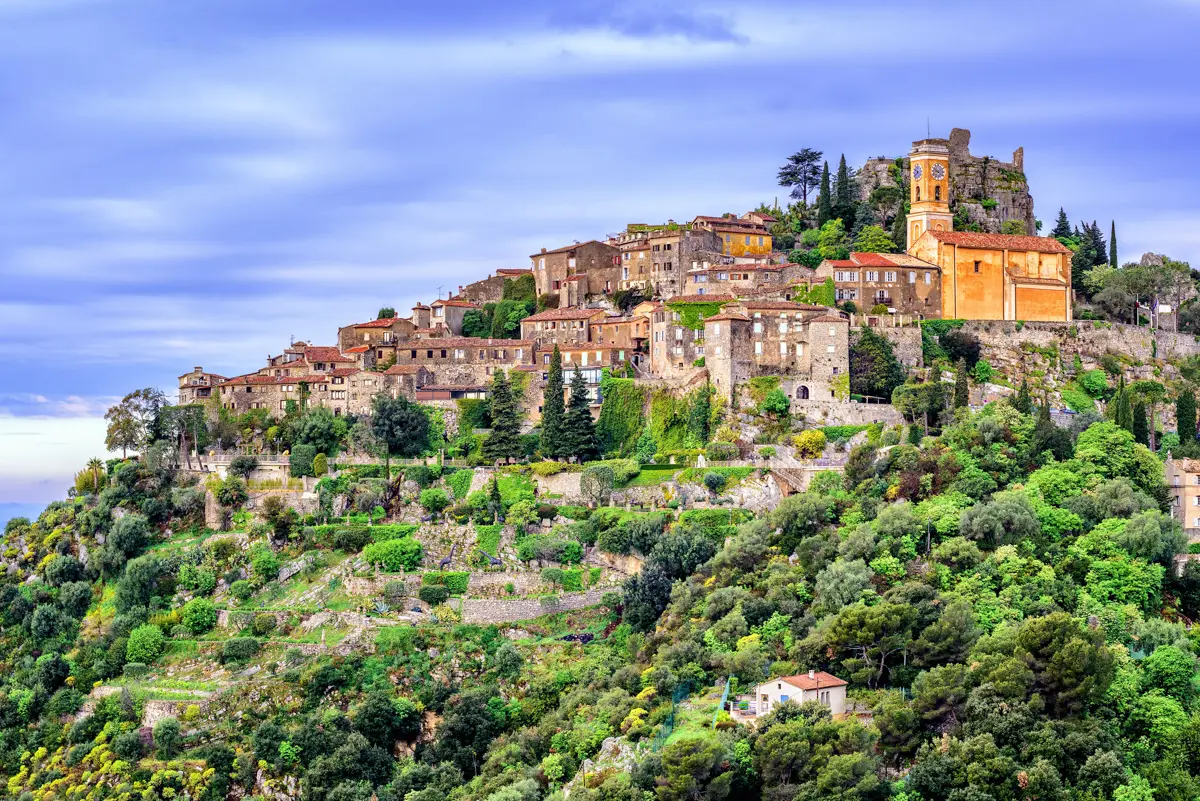
The village is also home to two of the coast’s most memorable small luxury hotels—Château Eza and Château de la Chèvre d’Or—making it one of the rare hilltop villages where staying overnight is as rewarding as visiting for the views alone.
For hikers, the Nietzsche Path connects the medieval village to the coastline below, offering one of the Riviera’s most scenic walks between Èze Village and Èze-sur-Mer.
FYI: The train stops in Èze-sur-Mer and not the elevated medieval village.
Roquebrune-Cap-Martin
Another underrated Côte d’Azur stop, Roquebrune-Cap-Martin, offers a quieter stretch of coastline with walking paths, gardens, and sweeping Mediterranean views within easy reach of the principality.
The dramatic cliffside Maybourne Riviera hotel has brought new attention to this part of the coast with its panoramic terraces overlooking the sea, while Maybourne La Plage, the hotel’s beach club below, provides one of the most stylish swimming stops along this eastern Riviera corridor.
The area is also known for the scenic coastal Le Corbusier Path, a memorable seaside walk connecting Roquebrune with Monaco.
Menton
With its pastel old town climbing above the harbor and gardens filled with citrus trees, Menton feels like the French Riviera exhaling a little before crossing the border.
Here, there is a strong Italian influence, visible in both its architecture and cuisine. The town is also famous for its annual Fête du Citron (Lemon Festival) held each spring.
If you’re the splurging type, three-Michelin-starred Mirazur, one of the French Riviera’s most celebrated dining destinations, is set on a hillside overlooking the Mediterranean.
French Riviera Towns Between Nice and Saint-Tropez
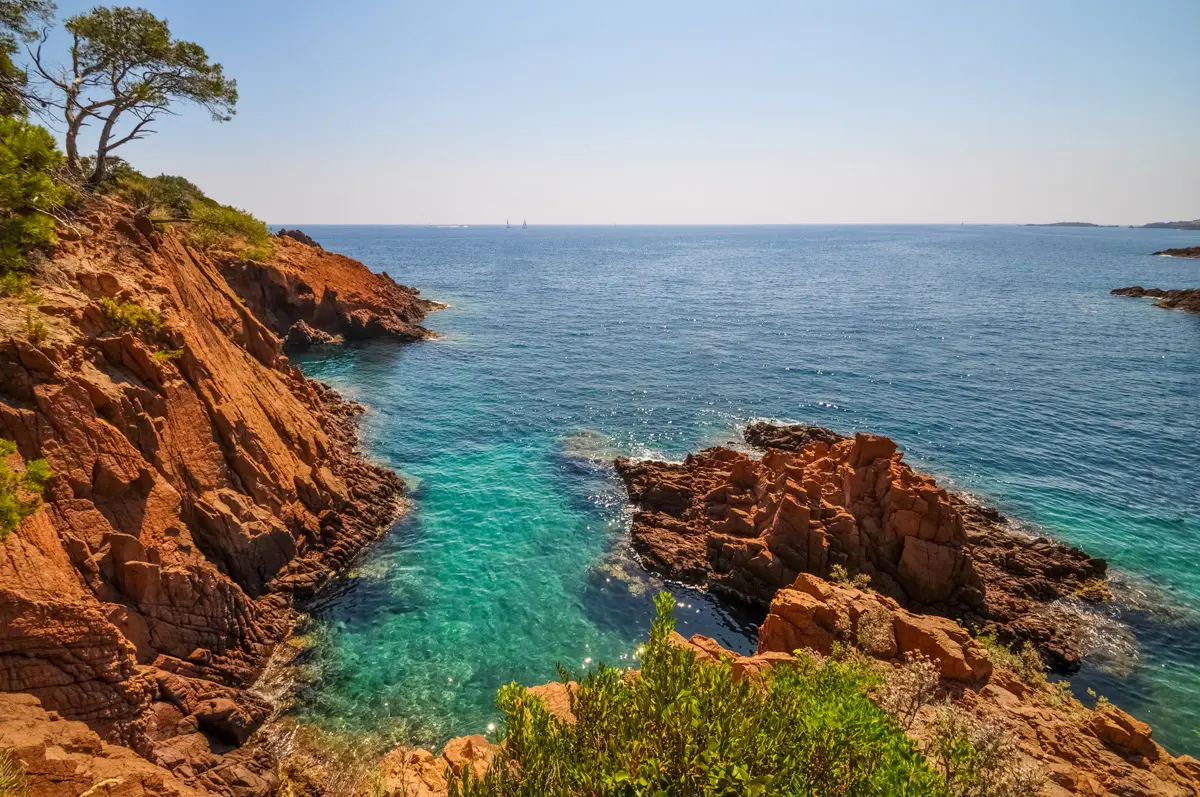
Head west from Nice toward Antibes, Cannes, and Saint-Tropez and the Riviera begins to feel a little wilder (and I don’t mean the nightlife). Nice’s pebbly beaches give way to sandy ones, while the striking red cliffs of the Esterel mountains hide turquoise calanques and excellent hiking.
Théoule-sur-Mer
Théoule-sur-Mer is often overlooked by first-time visitors.
The small village and its eight-mile coastline hide small coves and quieter beaches, including at the foot of the dramatic red Esterel mountains. Against the sapphire blue water of the Mediterranean, it is absolutely stunning.
For nature lovers seeking a little more space and scenery, yet still close enough to busier resort times, Theoule-sur-Mer could be the answer. It’s a popular spot for scenic walks and hikes in the Pointe de l’Aiguille State Park too.
Antibes
Antibes offers one of the Riviera’s most balanced stays, pairing sandy beaches with a lively old town and the famous Marché Provençal covered market.
The coastal path around Cap d’Antibes is one of the most scenic seaside walks on the Côte d’Azur, and the town sits directly on the main coastal train line.
Cannes
Centered around the palm-lined Boulevard de la Croisette, Cannes combines classic Riviera beaches with one of the coast’s best train-connected locations, making it an easy base for exploring Antibes, Nice, and inland villages like Mougins.
Climb through Le Suquet, the historic old quarter above the harbor, for some quaint restaurants and some of the best views of Cannes and the Lerins Islands.
Sainte-Maxime
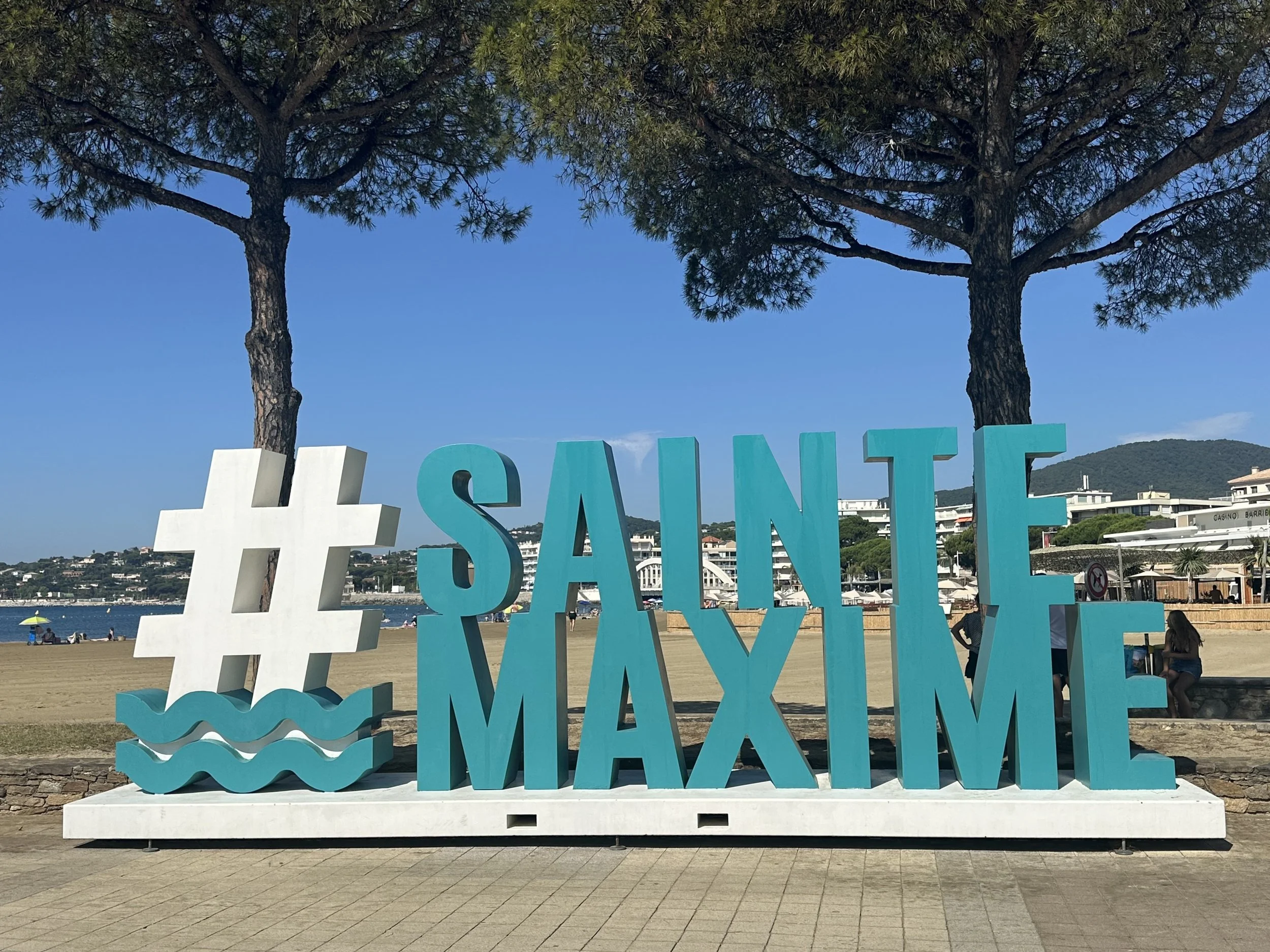
Set just across the Gulf from Saint-Tropez, Sainte-Maxime offers a more relaxed, family-friendly French Riviera atmosphere while maintaining easy access to its famous neighbor.
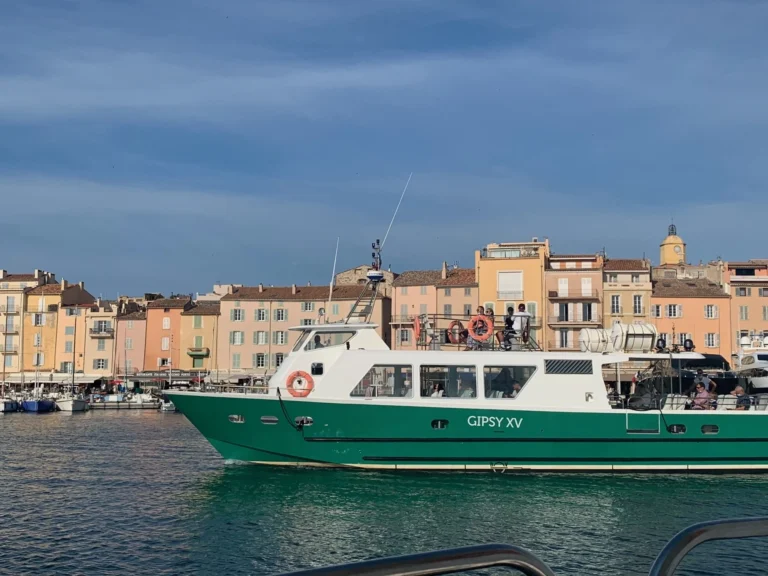
The town has broad sandy beaches, a lively but manageable waterfront promenade, and a practical marina with frequent Bateaux Verts ferries connecting directly to the port of Saint-Tropez in about 15 minutes.
With easier parking, good markets, and a laid-back Provençal feel, Sainte-Maxime works especially well as a quieter base for exploring the western Côte d’Azur without the crowds and prices of staying inside Saint-Tropez itself.
Saint-Tropez
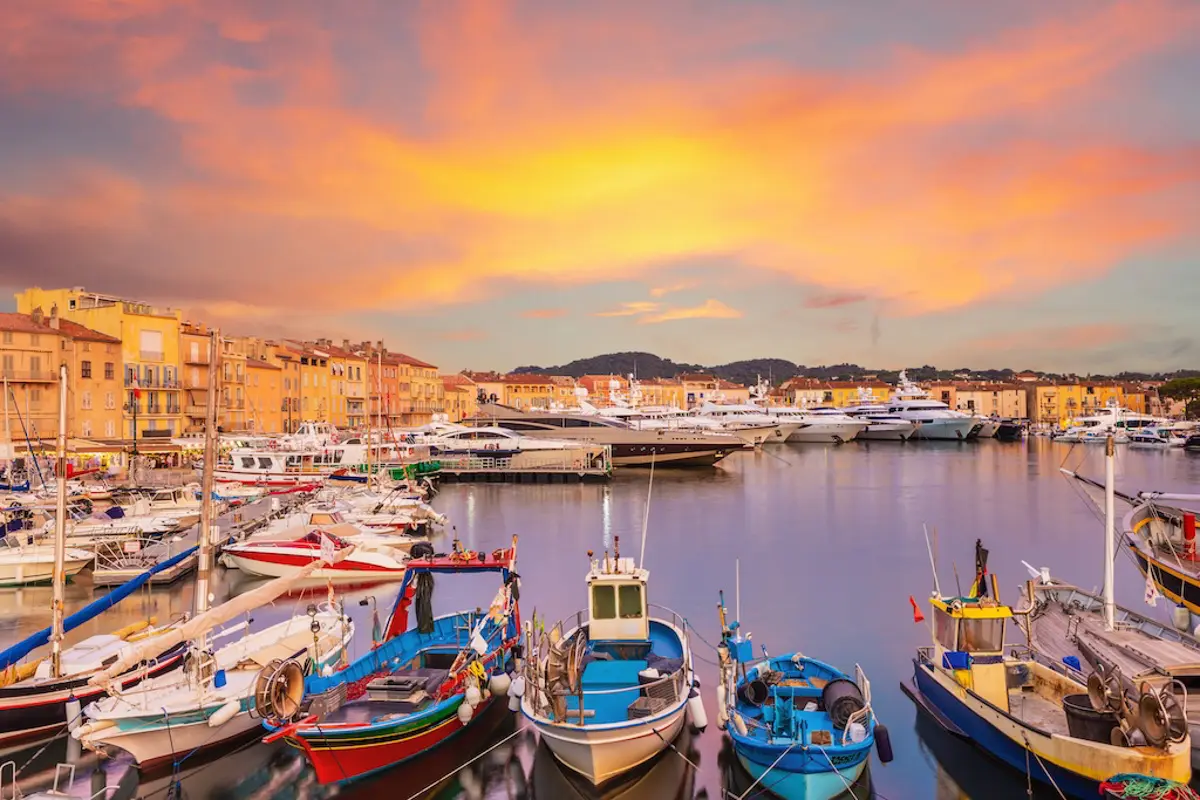

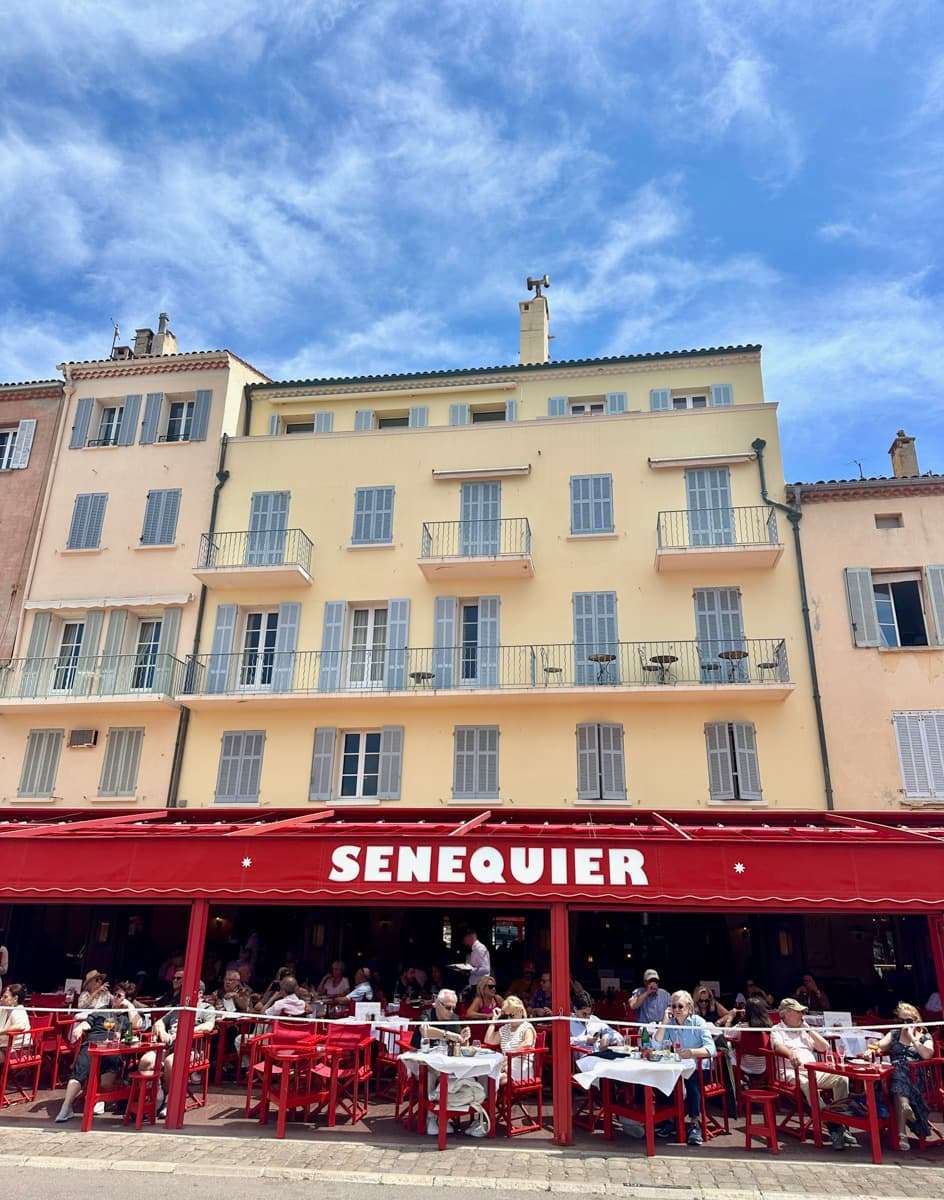
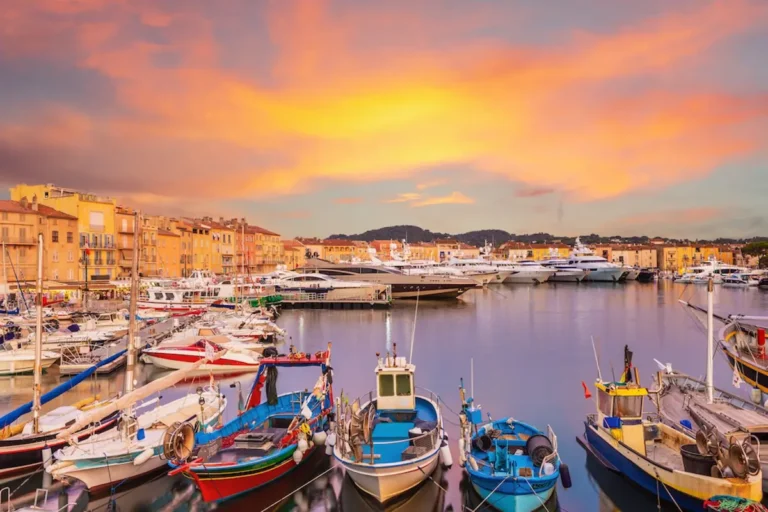
Home to the legendary Pampelonne Beach, Saint-Tropez is where glamour goes to vacation—but arrive early enough in the morning, and it still feels like a quiet French fishing village that just happens to wear designer sunglasses.
Even around its yacht-encrusted port, the mystique of Saint-Tropez lingers. I love to wander the narrow streets that look as if they’ve been polished. The Place des Lices, hosts a twice-weekly market year-round. The rest of the time, Saint-Tropez’s main square is for heated games of pétanque.
FYI: trains do not reach Saint-Tropez (only cars, boats, helicopters, and planes), but there are several other ways to get to Saint-Tropez.
Hilltop Villages of the French Riviera
Perched in the foothills above the coastline, many of the French Riviera’s villages began as defensive fortresses built to guard against attacks from the sea.
Today, these small towns are invaded by tourists, especially Èze and Saint-Paul-de-Vence, which are among the most atmospheric, with winding stone streets, galleries, and sweeping Mediterranean views at nearly every turn.
Saint-Paul-de-Vence
Long associated with artists including Marc Chagall (he lived here for nearly two decades and is buried in the village cemetery), Saint-Paul-de-Vence remains one of the French Riviera’s most atmospheric hilltop villages.
Its narrow stone streets are filled with small artist studios, while the nearby Fondation Maeght houses one of southern France’s most important collections of modern art.
If you’re considering an overnight, La Colombe d’Or was once a gathering place for artists, including Picasso, Matisse, and Chagall.
Mougins
When I pick up friends in Nice and make my way back toward Saint-Tropez, I often stop here for lunch. It’s the perfect in-between respite and a chance to show it off to visiting friends.
Set in the hills just behind Cannes, Mougins feels like a whisper in the whirlwind of busy French Riviera towns. It’s fun to just wander (and won’t take you long).
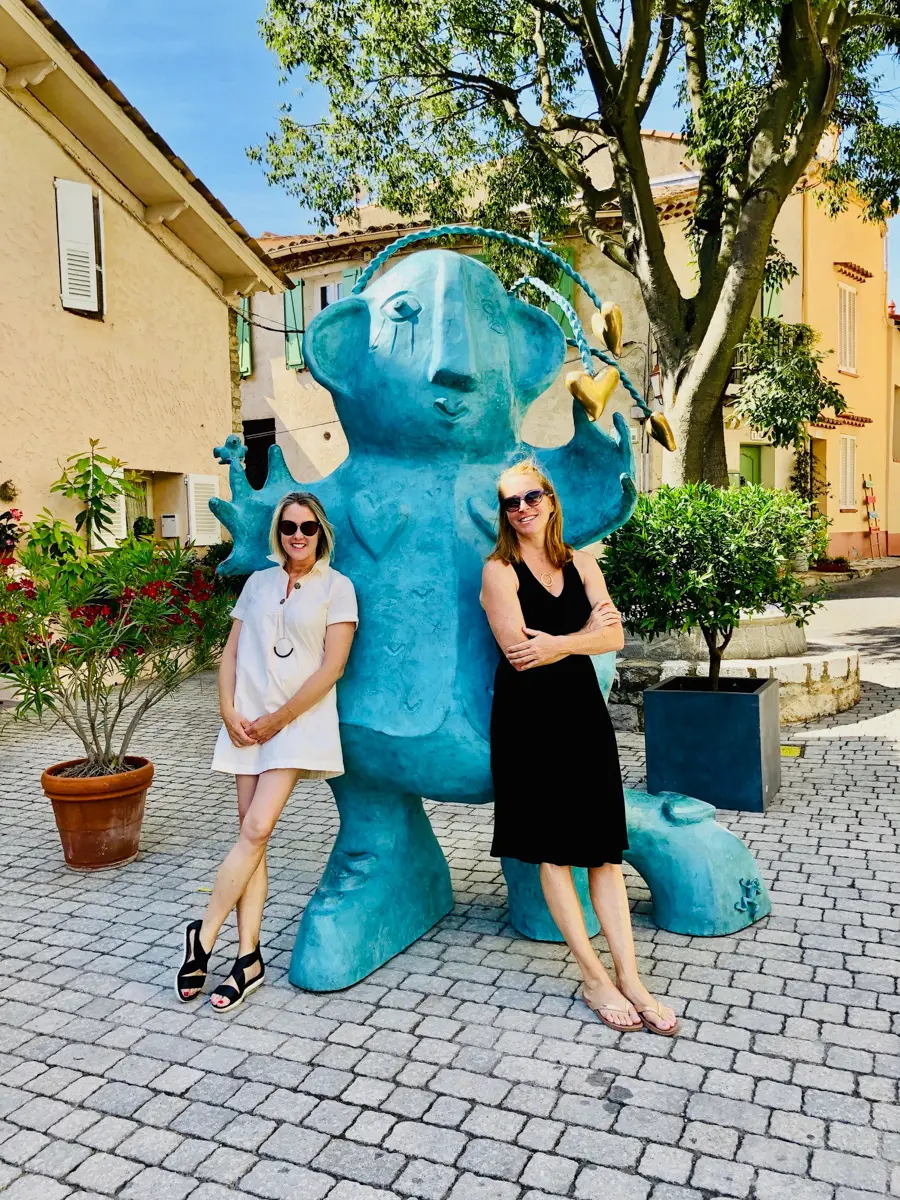
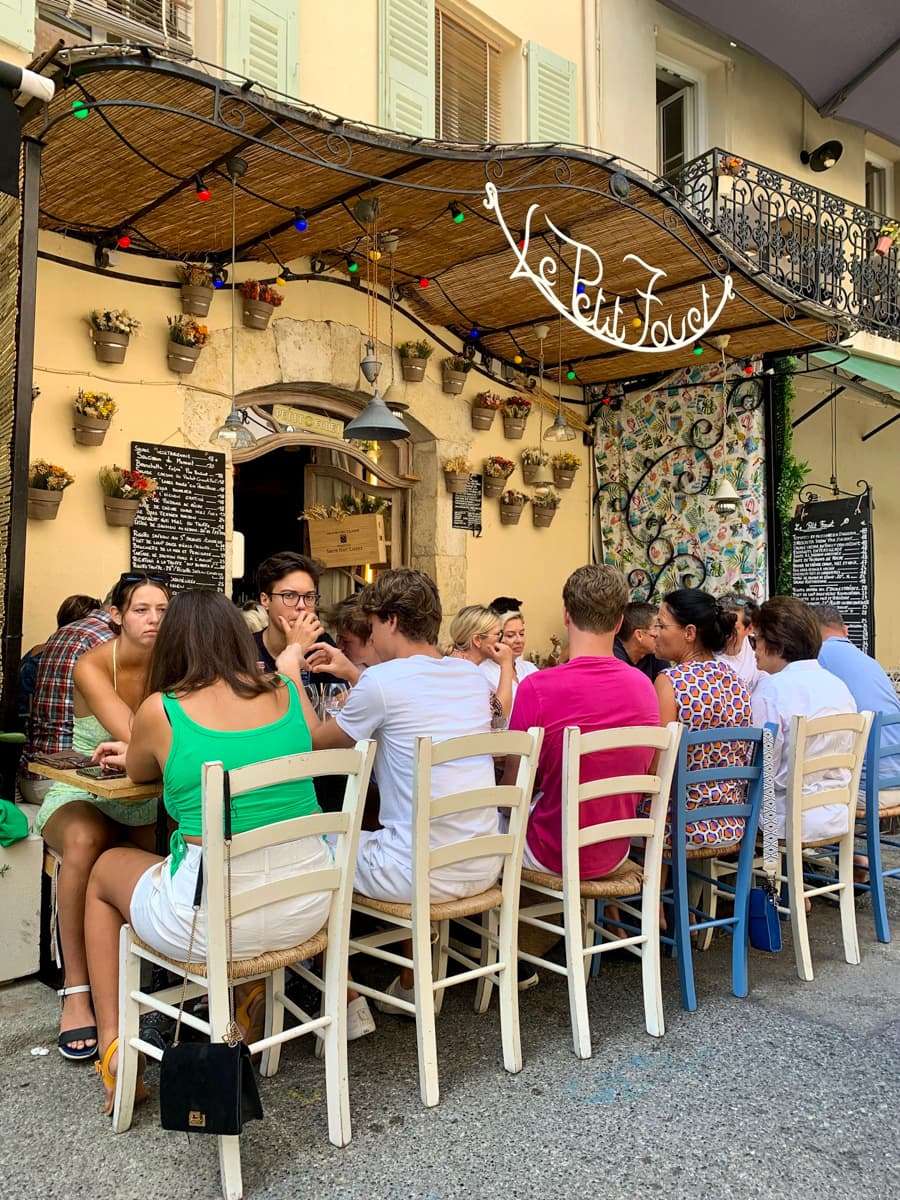
You’ll find a scattering of contemporary art galleries, studios, and casual bistros and restaurants. Pablo Picasso spent his final years here, and the village still retains a quietly sophisticated atmosphere.
For an elegant five-star hotel stay, Le Mas Candille is one of the French Riviera’s most appealing countryside lodgings, within easy reach of the coast.
Biot
It’s always nice to find a surprise when you travel, even when it’s to busy and well-known areas like the French Riviera, and Biot was a pleasant surprise.
The fortified medieval hilltop village near Antibes is known for its traditional glassblowing studios and its ‘bubble glass.’ Biot is also home to the Fernand Léger National Museum, making it a satisfying stop for off-the-beaten-path travelers and modern art lovers.
FYI: Biot (pronounced bee-ott) is one of the rare French language exceptions where the final consonant is not silent.
Monaco: The Riviera’s Royal Enclave
Though technically its own country and a Principality, Monaco is inseparable from the French Riviera experience.
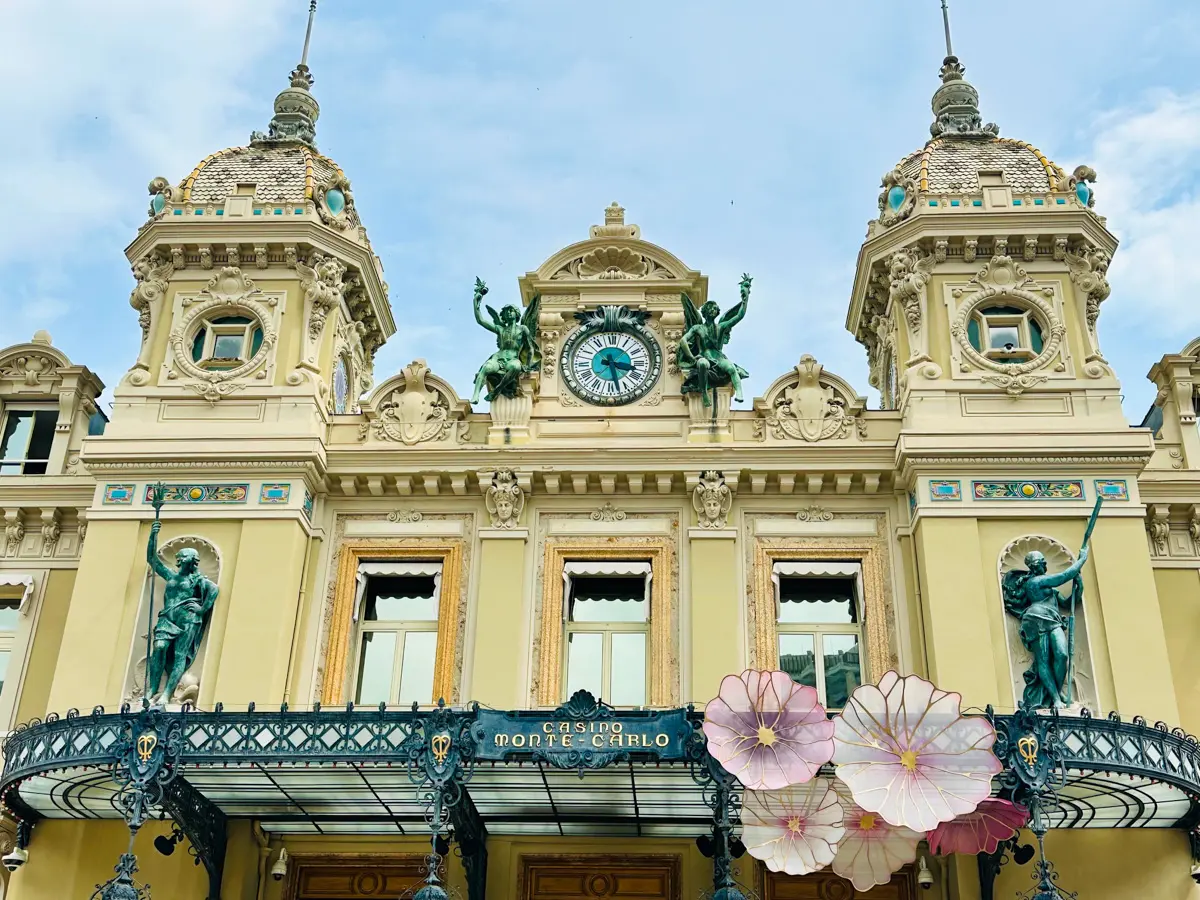
From the haute couture shopping and Casino of Monte Carlo to the relaxed clubs on Larvotto Beach and the historic streets of Monaco-Ville, a visit here adds a distinctly glamorous dimension to any itinerary. And— it’s less than 30 minutes from Nice by train.
In case you’re wondering: even though Monaco is its own country and not part of the European Union, visitors can easily enter from France without a passport, but you will need one to enter the casino!
Suggested French Riviera Town Itineraries
1. First-Time French Riviera Trip
Best For: travelers who don’t want to rent a car or are visiting the French Riviera for the first time.
Base yourself in Nice. It’s a great, manageable city with narrow, atmospheric streets in its Old Town and the best waterfront walk on the French Riviera: the Promenade des Anglais, lined with restaurants, beach clubs, and plenty of blue chairs for resting and people-watching.
From Nice, half-day and day trips are easy to villages like Villefranche-sur-Mer, Antibes, Cannes, and Monaco. Many guided French Riviera tours also pick up and drop off in Nice, making it super easy for first-timers to get the lay of the land.
2. Glamorous French Riviera Itinerary
Best For: classic French Riviera icons, sightseeing, and beach club scenes
Combine visits to Cannes, Saint-Tropez, Monaco, and Cap Ferrat for a mix of historic grand hotels, yacht harbors, and some of the coast’s most famous beach scenes, dining, and shopping.
3. Hilltop Village Itinerary
Best For: art lovers, photographers, and quieter countryside scenery
Combine Èze, Saint-Paul-de-Vence, Mougins, and Biot to explore medieval streets, artist studios, sculpture gardens, and some of the Riviera’s best-kept secrets.
4. Train the French Riviera from Nice to Menton
Best For: train-based day trips or overnights from Nice with dramatic views
Follow the TER trainline and the dramatic eastern French Riviera coastline from Nice to Villefranche-sur-Mer, Beaulieu-sur-Mer, Roquebrune-Cap-Martin, and Menton, stopping along the way or spending the night to enjoy villa visits, coastal hikes, and long, lingering lunches with a view. Trains also go to Antibes, Cannes and Théoule-sur-Mer and Saint-Raphael
For easy booking, I love the Trainline app. It lets you check schedules, book journeys, and keep tickets organized. You can also book online and print tickets if you don’t want your phone out all the time.